Survey on Consumer Attitudes Toward Electrical Stunning of Sea Bream and Sea Bass
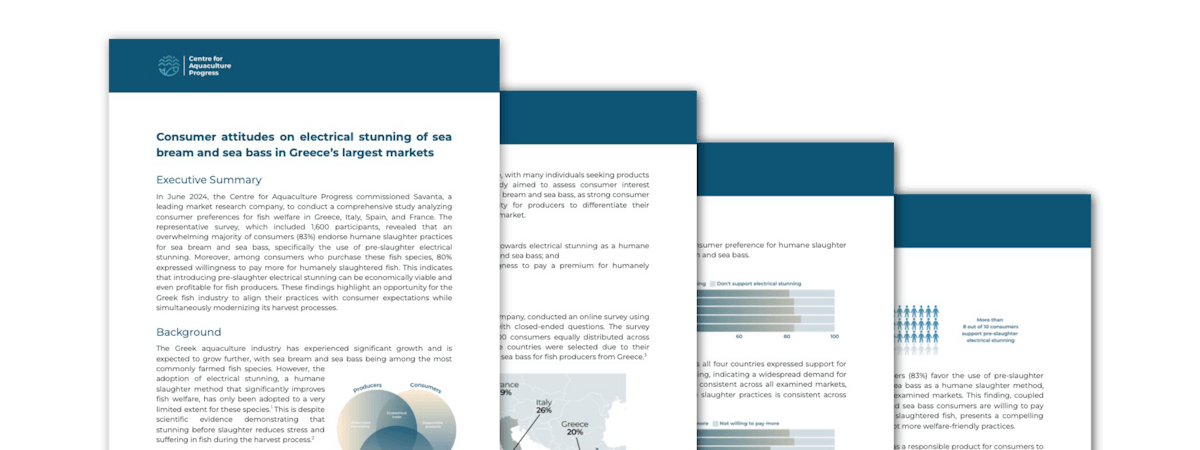
We have released the findings of a survey examining consumer attitudes toward humane slaughter practices in aquaculture, with a focus on pre-slaughter electrical stunning of sea bream and sea bass. The survey, conducted in June 2024 by market research firm Savanta, collected responses from 1,600 participants across Greece, Italy, Spain, and France.
Key Findings
Support for electrical stunning: Across the surveyed markets, 83% of consumers indicated that they support the use of pre-slaughter electrical stunning as a humane method for harvesting sea bream and sea bass.
Willingness to pay a premium: Among respondents who purchase these species, 80% expressed a willingness to pay an additional €0.05 per 200g serving for fish that has been humanely slaughtered. This willingness to pay was generally consistent across Greece, Italy, and France, with slightly lower figures observed in Spain.
Demographic consistency: Support for humane slaughter practices showed no significant variation by age, gender, or income level, suggesting broad-based consumer interest.
Background
Sea bream and sea bass represent key species in Mediterranean aquaculture, which continues to grow domestically and for export. The survey aimed to assess consumer interest in humanely slaughtered fish and to evaluate whether this interest could translate into a viable market opportunity for producers.
Methodology
Savanta conducted the survey using an online questionnaire, targeting a representative sample of consumers in each country.
Implications
The survey results highlight a potential opportunity for Mediterranean aquaculture producers to align their practices with consumer expectations. Introducing pre-slaughter electrical stunning could both meet consumer demand for improved welfare and offer an economically feasible strategy, as the cost increase per serving is estimated to be modest.
Access the Report and Data
The full survey report is available online.
For raw data access or further inquiries, please contact [email protected].